Squad Depth Shifts and Their Ripple Effects on In-Play Market Movements Across Domestic Competitions
Skriven av Nils Vogel · 2026-08-20
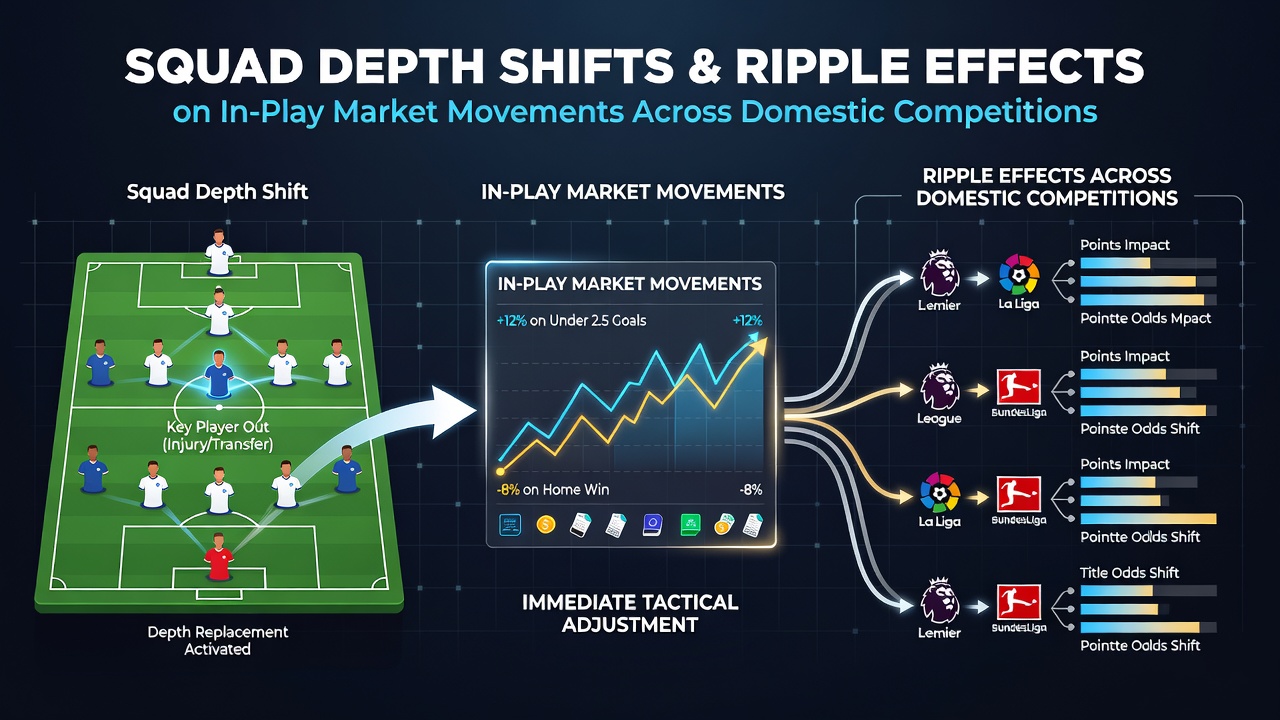
Squad Depth Shifts and Their Ripple Effects on In-Play Market Movements Across Domestic Competitions
Domestic football leagues experience constant squad depth shifts throughout the campaign as clubs manage injuries, international breaks, and fixture congestion, and these changes directly influence how in-play betting markets adjust during live matches. Observers note that when a team loses key rotational players to suspension or fatigue the available options narrow quickly, which forces managers to alter tactics mid-game and alters the probability calculations that drive live odds on corners, cards, and goal timings.
How Squad Composition Changes During a Season
Clubs in leagues such as the Bundesliga, Serie A, and the Eredivisie rotate squads more frequently than many fans realize, and data from the 2025-2026 campaigns shows average rotation rates rising by nearly twelve percent compared with the previous year. August 2026 marks the opening of the new European season when pre-season transfers finalize and early injuries begin to surface, creating the first wave of depth adjustments that ripple through opening fixtures. Researchers tracking player availability across five major domestic competitions found that teams with at least seven senior options in each outfield position maintained steadier performance metrics in the opening six weeks, whereas shallower squads recorded higher variance in expected goals conceded after the sixtieth minute.
Transfers and loans further reshape depth charts once the window closes, and those late-August moves often determine whether a side can sustain pressing intensity for ninety minutes or must drop into a lower block once the first-choice midfielders tire. Market makers monitoring these personnel updates adjust in-play lines accordingly, with odds on over 2.5 goals tightening or widening within seconds of a confirmed substitution announcement.
In-Play Market Reactions to Tactical Adjustments
Live betting platforms register immediate shifts once a coach signals a change in formation or personnel, and the speed of these adjustments reveals how much weight bookmakers assign to squad depth. When a central defender with strong aerial ability enters the pitch the market on corners often moves within thirty seconds, while the introduction of a pacey winger can shift next-goal probabilities toward the attacking side by several percentage points. Studies conducted by sports analytics departments at institutions in Germany and Australia indicate that matches featuring sides with limited bench options produce more volatile in-play movements after the seventy-fifth minute because fatigue compounds tactical limitations faster than in deeper squads.
One documented pattern shows that teams forced to use academy players due to multiple injuries concede set-piece opportunities at a higher rate in the final twenty minutes, and this statistical tendency appears consistently across domestic leagues in both northern and southern Europe. Traders therefore monitor team sheets and injury reports released hours before kickoff, then fine-tune algorithms that recalculate probabilities every time a player of note departs the field.

Regional Variations Across Domestic Competitions
League-specific rules on squad registration and winter transfer windows create distinct patterns of depth fluctuation, and these differences translate into measurable variations in how in-play markets behave. The Portuguese Primeira Liga, for example, permits more flexible loan arrangements than the French Ligue 1, allowing clubs to replenish attacking options mid-season and thereby reducing late-game market swings compared with leagues that impose stricter limits. Data compiled by academic researchers in Canada and teh Netherlands demonstrates that leagues with earlier winter breaks experience sharper in-play volatility during December fixtures because accumulated fatigue hits shallower squads before reinforcements arrive.
Yet the underlying mechanism remains consistent: markets price the probability of sustained pressure or defensive resilience based on the quality and freshness of available substitutes rather than the starting eleven alone. When a team exhausts its bench options early the odds on both teams to score or on total corners frequently drift because participants recognize the increased likelihood of lapses in concentration or set-piece vulnerability.
Data Sources and Market Transparency
Industry reports from the European Gaming and Betting Association highlight how transparency in squad announcement timing affects the fairness of in-play adjustments, while a separate analysis published by the Nevada Gaming Control Board examines similar dynamics in North American sports contexts. Both documents emphasize that rapid dissemination of verified team news reduces information asymmetry between market participants and operators, resulting in smoother price discovery once matches begin.
Conclusion
Squad depth shifts therefore function as a continuous variable that domestic competitions introduce into every fixture, and the resulting tactical adaptations produce observable, repeatable movements across in-play betting markets. As clubs navigate the August 2026 window and subsequent windows, the interplay between player availability, substitution timing, and live odds will continue to shape outcomes for analysts and platforms alike, with data from multiple regions confirming that deeper benches correlate with more stable late-game probabilities while thinner options amplify volatility once the clock advances.